Sunday, October 19, 2014


Tuesday, March 5, 2013
Systemeering
Dear readers and system thinkers.
It's my purpose to give you and to share with you information , articles, blogs, case-study, etc ...on systems thinking and complexity.
In a complex world , we have to consider that everything is related to each other and forms a dynamic system.We have to see the reality through a systemic lens.
...I call it systemeering!

For that purpose I've created a new website "Systemeering" where I present my different offerings and new blog.
From now on , I will blog on www.systemeering.be/blog, where you can inscribe on the systemeering newsletter.
Enjoy the new website !!
www.systemeering.be
Ides
Tuesday, February 12, 2013
Mindwalk
On a nice day in January, there was a Big layer of snow in my garden I was looking for a movie , where some systems thinking and holistic ideas were used ......and I found "Mindset "
The trailer , which i want to share with you was marvellous.
"MINDSET"
Based on the book "The turning point" by Fritjof Capra.
It´s the beginning of the 90´s, the world collective consciousness is still focused in mass production to feed the mass consumption. Ecological consciousness was still for a few, seen by others as fanatics.
In the middle of that consciousness scenario three characters meet: a physicist away from her job due to ethical conflicts, played by the wonderful Liv Ullman, a U.S. presidential candidate beaten in the last elections (Sam Waterson) and a poet, who has just gone through a love disappointment (John Heard).
Along the script no great romantic story, just conversations about ideas which are not new today, but at the time were quite revolutionary. Based on Fritjof Capra novel and brilliantly translated to a movie by director Bernt Capra (Fritjof's brother).
The majority of the movie is a conversation among three characters: a Norwegian scientist, Sonia Hoffman (played by Liv Ullmann), "the only woman in my department, the first in Norway doing quantum field theory"; an American politician and former presidential candidate, Jack Edwards (played by Sam Waterston); and poet Thomas Harriman (played by John Heard), a former political speechwriter, as they wander around Mont Saint Michel, France. The movie serves as an introduction to systems theory and systems thinking, while insights into modern physical theories such as quantum mechanics and particle physics are also given.
This is a film to watch again and again, specially in the present days, when we are moving into a more ecological consciousness.
The trailer , which i want to share with you was marvellous.
"MINDSET"
Based on the book "The turning point" by Fritjof Capra.
It´s the beginning of the 90´s, the world collective consciousness is still focused in mass production to feed the mass consumption. Ecological consciousness was still for a few, seen by others as fanatics.
In the middle of that consciousness scenario three characters meet: a physicist away from her job due to ethical conflicts, played by the wonderful Liv Ullman, a U.S. presidential candidate beaten in the last elections (Sam Waterson) and a poet, who has just gone through a love disappointment (John Heard).
Along the script no great romantic story, just conversations about ideas which are not new today, but at the time were quite revolutionary. Based on Fritjof Capra novel and brilliantly translated to a movie by director Bernt Capra (Fritjof's brother).
The majority of the movie is a conversation among three characters: a Norwegian scientist, Sonia Hoffman (played by Liv Ullmann), "the only woman in my department, the first in Norway doing quantum field theory"; an American politician and former presidential candidate, Jack Edwards (played by Sam Waterston); and poet Thomas Harriman (played by John Heard), a former political speechwriter, as they wander around Mont Saint Michel, France. The movie serves as an introduction to systems theory and systems thinking, while insights into modern physical theories such as quantum mechanics and particle physics are also given.
This is a film to watch again and again, specially in the present days, when we are moving into a more ecological consciousness.
Tuesday, February 5, 2013
Mastering Complexity
I have 37 years worked in a international company where there have been regularly conflicts between parts of the company , and this mainly due to culture differences, but also due to lack of awareness of the fact that the success of the company was depended on the connectives and relationship of his different parts .
Inspired by a article of Mr Shawn Kent Hayashi, I can summarize the following:
Business is more complex than it has ever been.Companies have to compete in a global economy, and must collaborate in and across teams and learn their way through complexity.
Companies are open systems, consisting of subsystems , but also belonging to bigger systems such as market systems, legal systems, etc....
Each system has a different behaviour created by the structure of the system.This structure is made of the interconnection of people, all with their own mental model:values, beliefs,...
So we can say , that all elements of the system has their own culture, and this is leading to complexity in collaboration and very sensitive for conflicts.
For a international company , doing globally business it is very important to be aware of this , to acknowledge it ,to respect it and to look after different paths to be successful.
What can be done ?Here some tips:
1.
Raise awareness about potential conflicts.Acknowledge and learn that cultural differences, thinking differences, physical distance , greeting habits, meeting habits ...can separate team members.
Understanding and communicating around this will allow leaders to prevent conflicts.
2.
Learn about communication styles :Everybody is communicating in different styles depending his education , knowledge , country of origin , etc..Communication by telephone and mail will make it still more difficult to assure that the communication is well understood.A common language has to be created so that everybody of a team can communicate effectively with each other.
3.
Acknowledge that conflict and frustration is inevitable in solving complex problems.It is not likely that we will see things the same way but we have to be open to discuss it and to create a shared vision.
We'll all need to put our puzzle pieces together, and explore ways to fit them together to see what possible solutions emerge.
4.
Establish a different mindset of failure, because each mistake will give us feedback for learning.Therefore failure stories should be shared across the teams , not only from your own teams but also from others in your industry.
5.Create the learning organisation:these are the Five disciplines ( P.Senge)
- Think in systems
- Accept mental models
- Team building
- Shared vision
- Personal mastery
Inspired by a article of Mr Shawn Kent Hayashi, I can summarize the following:
Business is more complex than it has ever been.Companies have to compete in a global economy, and must collaborate in and across teams and learn their way through complexity.
Companies are open systems, consisting of subsystems , but also belonging to bigger systems such as market systems, legal systems, etc....
Each system has a different behaviour created by the structure of the system.This structure is made of the interconnection of people, all with their own mental model:values, beliefs,...
So we can say , that all elements of the system has their own culture, and this is leading to complexity in collaboration and very sensitive for conflicts.
For a international company , doing globally business it is very important to be aware of this , to acknowledge it ,to respect it and to look after different paths to be successful.
What can be done ?Here some tips:
1.
Raise awareness about potential conflicts.Acknowledge and learn that cultural differences, thinking differences, physical distance , greeting habits, meeting habits ...can separate team members.
Understanding and communicating around this will allow leaders to prevent conflicts.
2.
Learn about communication styles :Everybody is communicating in different styles depending his education , knowledge , country of origin , etc..Communication by telephone and mail will make it still more difficult to assure that the communication is well understood.A common language has to be created so that everybody of a team can communicate effectively with each other.
3.
Acknowledge that conflict and frustration is inevitable in solving complex problems.It is not likely that we will see things the same way but we have to be open to discuss it and to create a shared vision.
We'll all need to put our puzzle pieces together, and explore ways to fit them together to see what possible solutions emerge.
4.
Establish a different mindset of failure, because each mistake will give us feedback for learning.Therefore failure stories should be shared across the teams , not only from your own teams but also from others in your industry.
5.Create the learning organisation:these are the Five disciplines ( P.Senge)
- Think in systems
- Accept mental models
- Team building
- Shared vision
- Personal mastery
Thursday, January 31, 2013
Seeing the whole
Dear friends,
The month January is nearly finished....time flies at the same speed we are living.It was a hectic month full of food , drinks , best wishes and now it's time to think how we will make a happy and peacefully 2013.
I found this poem for reflection and want to share it with you:
To see a world in a grain of sand,
And a heaven in a wild flower,
Hold infinity in the palm of your hand,
And eternity in an hour.
The month January is nearly finished....time flies at the same speed we are living.It was a hectic month full of food , drinks , best wishes and now it's time to think how we will make a happy and peacefully 2013.
I found this poem for reflection and want to share it with you:
To see a world in a grain of sand,
And a heaven in a wild flower,
Hold infinity in the palm of your hand,
And eternity in an hour.
Sunday, January 27, 2013
Organisatie cultuur
Het
invoeren van een nieuwe strategie heeft steeds veranderingen tot gevolg:veranderingen
in structuur, verandering van processen , verandering in jobinhoud , enz…
Wanneer
deze veranderingen geen rekening houden met de organisatiecultuur , krijgt men
veel tegenstand en wordt het
spreekwoord” Kultuur eet strategie als ontbijt “zeker een waarheid.
Als de
strategie niet rechtlijnig loopt met de organisatiecultuur , zal het zeer
moelijk worden die strategie door te voeren!!
Maar eerst
, wat is een organisatiecultuur?
Organisatiecultuur is gedefinieërd door de waarden , overtuigingen en gedragspatronen die
leven in de organisatie , en die zich uiten in de systemen , processen ,
beloningsvormen, procedures, communicatiekanalen, verhalen ….enz die in de
organisatie gebruikt worden .
Organisatiecultuur
kunnen we ook door een systemische bril bekijken en de definitie terugvinden in
de figuur van de ijsberg, hieronderaan.


Wat
zichtbaar is boven het wateroppervlak , zijn de dagdagelijkse gebeurtenissen
die gezien worden in de organisatie.
Juist
onderaan het oppervlak hebben we de gedragspatronen die er uit voortvloeien ,
en die de normen van het bedrijf bepalen :een beetje zoals de “Code of
Conduct”.
Die
gedragspatronen worden ondersteund door de systemische structuur van rollen ,
verantwoordelijkheden ,en de relaties ertussen.
Gans
onderaan vinden we de mentale modellen :waarden, veronderstellingen en
overtuigingen die de drijvers zijn van het gedrag.
Samen
bepalen deze verschillende niveaus onder de waterspiegel de organisatiecultuur,
en de meest effectieve manier om de cultuur te veranderen is in te spelen op de
mentale modellen , die het grootste hefboomeffect hebben voor het gehele.
Waarom is
het dan zo moeilijk dit te veranderen??
Laten we
daarvoor de karakteristieken van cultuur bekijken:
-
het
is meer impliciet dan expliciet
-
het
is versmolten in dagelijkse praktijken
-
het
leidt tot groepsdenken
-
het
heeft zijn gronden in de historiek van de organisatie
-
de
cultuur bepaalt het type van beslissingen
Hoe
veranderen we die cultuur?
De toon
moet gezet worden door goed leiderschap, maar iedereen heeft de
verantwoordelijkheid er toe bij te dragen!
De Vijf
Disciplines van P.Senge kunnen ons daar bij helpen:
-
Persoonlijk
meesterschap: Iedereen moet zich ontwikkelen , om de mentale modellen van
anderen te kunnen begrijpen en inzicht te krijgen in het systeem waartoe ze
behoren.
-
Mentale
modellen : Begin om Uw eigen model in vraag te stellen , en het doel van het
systeem te begrijpen.Begrijp ook je eigen inbreng in het systeem en de gevolgen
daarvan.
-
Teamwerk:
Voer dialoog , werk samen en maak verbindingen
-
Gedeelde
visie: Communiceer over de doelstelling , en maak een gedeelde visie om dit te
bereiken.
-
Systeemdenken:
Denk in relatie’s, geef niet de schuld aan anderen en denk op lange termijn
Dit gaat niet over één nachtje , maar de doelstelling is om met cultuur
en veranderingen aan dezelfde tafel te zitten.
Friday, January 25, 2013
Systems blindness
People fail to do smart things, even though it's obvious to everyone else what the right thing to do is .
I have done that also:I have done dumb things even when knowing in my heart , that it was dumb.For example I did drive to fast , in a street with speed limit of 50km/h,I've punished my daughter because she had a bad school report, etc .Everything had a reason to do it , but i didn't see the impact of my decisions on other things neither the unexpected consequences.
Also in the company I've worked , I have seen this :people are desperating at the dumb things their managers are doing.They trow their hands up in frustration at the dumb things the company ask them to do.
By this I am not saying that people are dumb, but their are many factors as to why we do dumb things.
Company's has policies, procedures, tasks, structure , communication lines in place which will create a system,culture and behavior.This system will say what the people in the system has to do , and how they have or will behave.
When the system is pushing for the short term decisions , internal competition, control and other dumb( read not for purpose) things , you cannot blame the people in the system:
It is often the system of management that is dumb, not the people within it.
You cannot blame the people for playing by the rules, you set for the game, and it is unfair to say your manager is dumb when they are doing what the system is set up for them to do.
This is where leadership is coming:Avoid systems blindness!!-See the relationships in a system!
- We have to be convinced that our organisations are open systems with a well defined purpose, and that the emergent property of this system is not the sum of the performances of the elements , but defined by the interrelationships and dynamics between the elements and subsystems.
- Senior leaders has to recognize these dynamics by taking a bigger picture view.They have to diagnose the working of the whole, and not seeing the business as a bunch of bits and peaces , some working well and sum working badly.
- Senior leaders has to recognize that system behavior and rules will impact the people behaviors.
- The place to exert influence ( the leverage point) is not to focus on what the people are doing, but at the level of values and mindsets.Culture is the thing out of which the results!!
- Senior leaders has to promote ongoing learning, and has to emphasize on the importance of key relationships in the business:they have to be created and maintained by information and knowledge.
I have done that also:I have done dumb things even when knowing in my heart , that it was dumb.For example I did drive to fast , in a street with speed limit of 50km/h,I've punished my daughter because she had a bad school report, etc .Everything had a reason to do it , but i didn't see the impact of my decisions on other things neither the unexpected consequences.
Also in the company I've worked , I have seen this :people are desperating at the dumb things their managers are doing.They trow their hands up in frustration at the dumb things the company ask them to do.
By this I am not saying that people are dumb, but their are many factors as to why we do dumb things.
Company's has policies, procedures, tasks, structure , communication lines in place which will create a system,culture and behavior.This system will say what the people in the system has to do , and how they have or will behave.
When the system is pushing for the short term decisions , internal competition, control and other dumb( read not for purpose) things , you cannot blame the people in the system:
It is often the system of management that is dumb, not the people within it.
You cannot blame the people for playing by the rules, you set for the game, and it is unfair to say your manager is dumb when they are doing what the system is set up for them to do.
This is where leadership is coming:Avoid systems blindness!!-See the relationships in a system!
- We have to be convinced that our organisations are open systems with a well defined purpose, and that the emergent property of this system is not the sum of the performances of the elements , but defined by the interrelationships and dynamics between the elements and subsystems.
- Senior leaders has to recognize these dynamics by taking a bigger picture view.They have to diagnose the working of the whole, and not seeing the business as a bunch of bits and peaces , some working well and sum working badly.
- Senior leaders has to recognize that system behavior and rules will impact the people behaviors.
- The place to exert influence ( the leverage point) is not to focus on what the people are doing, but at the level of values and mindsets.Culture is the thing out of which the results!!
- Senior leaders has to promote ongoing learning, and has to emphasize on the importance of key relationships in the business:they have to be created and maintained by information and knowledge.
Monday, January 21, 2013
Jaarlijkse evaluatiegesprekken
De tijd van evaluatiegesprekken is terug aangekomen , en zal terug aanleiding geven tot veel frustaties, gevoel van onrecht,ongeloof in het systeem en wantrouwen in de eerlijke beoordeling.
In mijn vroeger bedrijf hadden we het evaluatiesysteem PPR:People-Performances-Result.
De titel van het programma laat uitschijnen dat enkel door de efficientie van de mensen ,goede resultaten verkregen worden en dat die er enkel voor verantwoordelijk zijn .
Volgens W.Edwards Deming 85-15 regel zijn de prestaties van de werknemers meer afhankelijk van het systeem waarin ze zich bevinden , dan van hun eigen akties.
En de ervaring heeft me dit ook bewezen :
Er werd vertrokken van de visie en doelstellingen van het bedrijf , die vertaald werden naar de doelstellingen van de verschillende departementen en verder naar de persoonlijke doelstellingen van de werknemers .Logischerwijze zou er een verbinding en relatie moeten zijn tussen de verschillende resultaten , maar de realiteit is anders:
- Door het beloningssysteem focust iedereen op zijn eigen resultaten.
- Voor het niet behalen van de doelstellingen , word er een schuldige gezocht.
- Doelstellingen worden om de haverklap gewijzigd.
- Opgelegde doelstellingen krijgen tegenwind.
De organisatie is een systeem van elementen en subsystemen die met elkaar verbonden zijn , en waarvan de prestatie van één element beinvloed wordt door andere maar ook een invloed heeft op de andere.Die elementen en subsystemen zijn mensen , departementen, processen, communicatiekanalen .
Door die interrelaties , is het dan ook zo dat goede of mindere prestaties niet onmiddelijk de verantwoordelijk zijn van het individu , maar van het systeem en degenen die het systeem beheren.
We moeten dus eerst kijken naar het systeem en dan naar het individu.
- Wat is de doelstelling van het systeem en subsystemen?
- Is die doelstelling goed gecommuniceerd?
- Wat is de structuur van het systeem?
- Wat zijn de relaties in het systeem?
- Wat zijn de knelpunten in het systeem?
- Wat is de verantwoordelikheid en rol van het individu in het systeem?
De gepaste vragen stellen aan het individu gaan eerst het systeem evalueren , en dan het individu.Hier enkele voorbeelden .
- Op wat ben je trots in je werk?
- Wat wil je leren of verbeteren in je functie?
- Wat in de organisatie verhindert je , je functie beter uit te voeren?
- Wat heb je nodig van je collega's?
Antwoorden op die vragen , kunnen hefboompunten zijn om het systeem aan te passen en zo automatisch de individuele prestaties te verbeteren.
 Organisaties moeten bewust worden dat de globale resultaatsverbetering niet de som is van de individuele verbeteringen maar het resultaat van de interactie's tussen de verschillende elementen , die gezamelijk naar de globale doelstelling streven: het is de collectiviteit die telt!!!
In mijn vroeger bedrijf hadden we het evaluatiesysteem PPR:People-Performances-Result.
De titel van het programma laat uitschijnen dat enkel door de efficientie van de mensen ,goede resultaten verkregen worden en dat die er enkel voor verantwoordelijk zijn .
Volgens W.Edwards Deming 85-15 regel zijn de prestaties van de werknemers meer afhankelijk van het systeem waarin ze zich bevinden , dan van hun eigen akties.
En de ervaring heeft me dit ook bewezen :
Er werd vertrokken van de visie en doelstellingen van het bedrijf , die vertaald werden naar de doelstellingen van de verschillende departementen en verder naar de persoonlijke doelstellingen van de werknemers .Logischerwijze zou er een verbinding en relatie moeten zijn tussen de verschillende resultaten , maar de realiteit is anders:
- Door het beloningssysteem focust iedereen op zijn eigen resultaten.
- Voor het niet behalen van de doelstellingen , word er een schuldige gezocht.
- Doelstellingen worden om de haverklap gewijzigd.
- Opgelegde doelstellingen krijgen tegenwind.
De organisatie is een systeem van elementen en subsystemen die met elkaar verbonden zijn , en waarvan de prestatie van één element beinvloed wordt door andere maar ook een invloed heeft op de andere.Die elementen en subsystemen zijn mensen , departementen, processen, communicatiekanalen .
Door die interrelaties , is het dan ook zo dat goede of mindere prestaties niet onmiddelijk de verantwoordelijk zijn van het individu , maar van het systeem en degenen die het systeem beheren.
We moeten dus eerst kijken naar het systeem en dan naar het individu.
- Wat is de doelstelling van het systeem en subsystemen?
- Is die doelstelling goed gecommuniceerd?
- Wat is de structuur van het systeem?
- Wat zijn de relaties in het systeem?
- Wat zijn de knelpunten in het systeem?
- Wat is de verantwoordelikheid en rol van het individu in het systeem?
De gepaste vragen stellen aan het individu gaan eerst het systeem evalueren , en dan het individu.Hier enkele voorbeelden .
- Op wat ben je trots in je werk?
- Wat wil je leren of verbeteren in je functie?
- Wat in de organisatie verhindert je , je functie beter uit te voeren?
- Wat heb je nodig van je collega's?
Antwoorden op die vragen , kunnen hefboompunten zijn om het systeem aan te passen en zo automatisch de individuele prestaties te verbeteren.

Thursday, January 3, 2013
The old lady
Dear friends ,
I want to start the year 2013 with a poem.
It's a poem about an old lady , who has trapped herself in a non-ending reinforcement cycle , with a catastrophic result:she died!!
It's not a poem of myself .the original poem has been written by Rose Bonne and Alan Mills in 1952( I was 3 years old), and put in lyrics by different people:the most known Peter, Paul&Mary.
Here it comes:
I know an old lady
I know an old lady who swallowed a fly,
I don't know why she swallowed the fly,
I guess she'll die.
I know an old lady who swallowed a spider,
That wriggled and jiggled and tickled inside her.
She swallowed the spider to catch the fly,
I don't know why she swallowed the fly,
I guess she'll die.
I know an old lady who swallowed a bird,
How absurd to swallow a bird!
She swallowed the bird to catch the spider,
That wriggled and jiggled and tickled inside her,
She swallowed the spider to catch the fly,
I don't know why she swallowed the fly,
I guess she'll die.
I know an old lady who swallowed a cat,
Imagine that, to swallow a cat!
She swallowed the cat to catch the bird,
She swallowed the bird to catch the spider,
That wriggled and jiggled and tickled inside her,
She swallowed the spider to catch the fly,
I don't know why she swallowed the fly,
I guess she'll die.
I know an old lady who swallowed a dog,
My, what a hog, to swallow a dog!
She swallowed the dog to catch the cat,
She swallowed the cat to catch the bird,
She swallowed the bird to catch the spider,
That wriggled and jiggled and tickled inside her,
She swallowed the spider to catch the fly,
I don't know why she swallowed the fly,
I guess she'll die.
I know an old lady who swallowed a goat,
Just opened her throat and swallowed a goat!
She swallowed the goat to catch the dog,
She swallowed the dog to catch the cat,
She swallowed the cat to catch the bird,
She swallowed the bird to catch the spider,
That wriggled and jiggled and tickled inside her,
She swallowed the spider to catch the fly,
I don't know why she swallowed the fly,
I guess she'll die.
I know an old lady who swallowed a cow,
I wonder how she swallowed a cow?!
She swallowed the cow to catch the goat,
She swallowed the goat to catch the dog,
She swallowed the dog to catch the cat,
She swallowed the cat to catch the bird,
She swallowed the bird to catch the spider,
That wriggled and jiggled and tickled inside her,
She swallowed the spider to catch the fly,
I don't know why she swallowed the fly,
I guess she'll die.
I know an old lady who swallowed a horse,
She's dead, of course!!
I want to start the year 2013 with a poem.
It's a poem about an old lady , who has trapped herself in a non-ending reinforcement cycle , with a catastrophic result:she died!!
It's not a poem of myself .the original poem has been written by Rose Bonne and Alan Mills in 1952( I was 3 years old), and put in lyrics by different people:the most known Peter, Paul&Mary.
Here it comes:
I know an old lady
I know an old lady who swallowed a fly,
I don't know why she swallowed the fly,
I guess she'll die.
I know an old lady who swallowed a spider,
That wriggled and jiggled and tickled inside her.
She swallowed the spider to catch the fly,
I don't know why she swallowed the fly,
I guess she'll die.
I know an old lady who swallowed a bird,
How absurd to swallow a bird!
She swallowed the bird to catch the spider,
That wriggled and jiggled and tickled inside her,
She swallowed the spider to catch the fly,
I don't know why she swallowed the fly,
I guess she'll die.
I know an old lady who swallowed a cat,
Imagine that, to swallow a cat!
She swallowed the cat to catch the bird,
She swallowed the bird to catch the spider,
That wriggled and jiggled and tickled inside her,
She swallowed the spider to catch the fly,
I don't know why she swallowed the fly,
I guess she'll die.
I know an old lady who swallowed a dog,
My, what a hog, to swallow a dog!
She swallowed the dog to catch the cat,
She swallowed the cat to catch the bird,
She swallowed the bird to catch the spider,
That wriggled and jiggled and tickled inside her,
She swallowed the spider to catch the fly,
I don't know why she swallowed the fly,
I guess she'll die.
I know an old lady who swallowed a goat,
Just opened her throat and swallowed a goat!
She swallowed the goat to catch the dog,
She swallowed the dog to catch the cat,
She swallowed the cat to catch the bird,
She swallowed the bird to catch the spider,
That wriggled and jiggled and tickled inside her,
She swallowed the spider to catch the fly,
I don't know why she swallowed the fly,
I guess she'll die.
I know an old lady who swallowed a cow,
I wonder how she swallowed a cow?!
She swallowed the cow to catch the goat,
She swallowed the goat to catch the dog,
She swallowed the dog to catch the cat,
She swallowed the cat to catch the bird,
She swallowed the bird to catch the spider,
That wriggled and jiggled and tickled inside her,
She swallowed the spider to catch the fly,
I don't know why she swallowed the fly,
I guess she'll die.
I know an old lady who swallowed a horse,
She's dead, of course!!
Friday, December 28, 2012
Different perspectives
One of the cornerstones of a learning organisation is that the members of this organisation has a shared vision on the purpose of the organisation.
But are you sure that everybody understand the purpose in the same way?
The first step is to see the organisation as a dynamic open system, where are elements has to see the systems in different perspectives, in order to see what the real purpose is :be curious what the work of others is, what there mental models are, learn on what you didn't see, be reflective, change the structure and evaluate!
A example in the difference of perspective:
A
B W C
D
-What is A,B,C,D seeing?
-What is where for all?
In this example A, B, C ,D are a group and not a system.To have a shared vision on the inner letter, A,B,C,D should be connected together by feedback loops in order to create a dialogue and learn from each other.
Be open-minded: by seeing things differently , you think differently!
But are you sure that everybody understand the purpose in the same way?
The first step is to see the organisation as a dynamic open system, where are elements has to see the systems in different perspectives, in order to see what the real purpose is :be curious what the work of others is, what there mental models are, learn on what you didn't see, be reflective, change the structure and evaluate!
A example in the difference of perspective:
A
B W C
D
-What is A,B,C,D seeing?
-What is where for all?
In this example A, B, C ,D are a group and not a system.To have a shared vision on the inner letter, A,B,C,D should be connected together by feedback loops in order to create a dialogue and learn from each other.
Be open-minded: by seeing things differently , you think differently!
Sunday, December 23, 2012
Season Greetings

Season's Greetings and a succesful year 2013
Each end of the year,we make the intention to do better next year: more success in our professional life, more relaxation with our family, a better work-life balance, etc. ..
But our society is becoming more complex, with rapid changes and more uncertainties.
Therefore …. look 360 ° around you, see the world from different perspectives in order to discover the opportunities that will make the year 2013 a fantastic year.
I wish you: a prosperous and happy 2013
Ides
Friday, November 2, 2012
Cooplexity
End of last year, I participated in a workshop on collaboration in complex situations , and how to move from a group of individuals to a self -organized team.
Based on my past experience , here is a story how in a manufacturing plant , a group of people was moving to a well organized team .
"The oil and gas industry , and special the drilling activity is a very complicated process where uncertainty is a major factor . Uncertainty goes from not knowing which geological formation the drill bit will encounter, with as result not knowing what the performance of the bit will be compared to targeted performance .
Based on my past experience , here is a story how in a manufacturing plant , a group of people was moving to a well organized team .
"The oil and gas industry , and special the drilling activity is a very complicated process where uncertainty is a major factor . Uncertainty goes from not knowing which geological formation the drill bit will encounter, with as result not knowing what the performance of the bit will be compared to targeted performance .
Nevertheless,
everything can be controlled now a day’s, so if anything goes wrong, small
pieces of the system can be analyzed, corrected and the whole system will work
again.
All best practices are written in policies and procedures. The whole drilling activity is a high tech mechanical process which is complicated , but easily controlled.
All best practices are written in policies and procedures. The whole drilling activity is a high tech mechanical process which is complicated , but easily controlled.
In the Cynefin model we are in the right
segments of the controllable environment.
The main
reason is , that it is a mechanical process, where human intervention and
decision is minimum.
But the bit
can be start to wear very fast ( due to change in drilling parameters, quality
of the bit, formation)and stop to drill , before the desired target is met .This
is the biggest uncertainty:you don’t know , when this will happen and why it
has happen .Their is no time also to first examine the bit and find the cause
….what has to be done is to order asap a new bit and discuss with the design
engineers.
That’s
where the complexity starts: data has to be send overseas to the manufacturing
plant, the design engineers has to be notified , material has to be ordered ,
bit has to be redesigned , bit has to be manufactured and shipped back to the rig :the only certainty which exist
is : it has to be for yesterday!!!
When you
see the situation in the manufacturing plant , the situation is different :
-
First
, the orders are coming from different customers, from different locations and
are all other bit types.
S So there is a very large product mix which are demanding different materials, different process times. The manufacturing processes have also constraints: a limit of resources( labor time), availability of materials( inventory policies), and unexpected events like sickness and equipment maintenance.
S So there is a very large product mix which are demanding different materials, different process times. The manufacturing processes have also constraints: a limit of resources( labor time), availability of materials( inventory policies), and unexpected events like sickness and equipment maintenance.
At the same time there is no forecast , so there is a big uncertainty when the
orders will come in and how much.
-
Also,
each order has to be designed or standard models modified,and approval asked to
the field for production.
There is no certainty , that the bit will be approved or the order confirmed ,but engineering resources has to be used to design the bit and manufacturing processes in all cases.
There is no certainty , that the bit will be approved or the order confirmed ,but engineering resources has to be used to design the bit and manufacturing processes in all cases.
-
The
organisation is structured in departments:customer -service departments( 2
people), purchase dept ( 2 people), planning and work preparation (1),
manufacturing engineering for making bill of materials and routers( 2 people), engineering (5 people),
manufacturing management ( 2 people).The availability of resources is very
variable and only known by the department.
So , as
described the environment is very complex by his complex communication-network,
variability in order -income, uncertainty of resources and materials,
uncertainty of payment , etc .
THE ONLY
CERTAINTY IS THAT ALL BITS FOR ALL CUSTOMERS HAS TO BE PRODUCED IN MAX 8
WORKING DAYS!!( that is the customer request)
So, I will
tell the story what has happened over the years and how we have evolved from
a group of individuals to a team .
- -
The
different departments are sitting in ,an open space , dispersed in different locations.
Sharing knowledge on what is happening can only by phone, running around walking and talking in the corridors.
The order is coming from the customer to the customer service department dept.They
phone to engineering department, to gather information on the status of
drawing, check materials availability with purchase and asked for a delivery
date to manufacturing. Taken in consideration all this , a final date is send
to the customer .So every department try to optimize as much as possible their needed
knowledge, but without knowing what the other was doing , or what the overall issues
were.
So it happened often , that delay’s were not communicated and the
system was going into a complete chaos .
-
- Next
step was , that management was pushing to learn from each order .So
every morning there was a meeting with the department responsible , where the
issues of each department were discussed and also the status of the orders.
Changes were announced, but there was nothing formal.
- More knowledge was shared by interdepartmental meetings , visiting the shop, speaking with
people and workers: we created a group of knowledge people.
- -
The
learning from each other was also increased by cross functional
functions:Customer service, purchase , planning has been cross functional
trained, to do if necessary , more than one function . the same with
engineering, manufacturing engineering and planning.
- -
The
initial group, decided to formalize the meetings: all order status were put on
a Excel spreadsheet, completed with information on material , manufacturing
status, resource availability, etc :this has been best practices for a long
time, and planning meetings has become more efficient .
- - With the implementation of SAP, data gathering was still better, and faster.
- - With the implementation of SAP, data gathering was still better, and faster.
But still
the objective was still not achieved , because the orders were still pushed
trough the workshop , without knowing the issues in the blue collar system.
Therefore
by applying leanmanufacturing technical, kaizen events were organized with the
workers to better understand the issues.
- The same
group of people , now together with
workforce decided to change completely the order system and launching
system in the shop. Procedures and rules has been established, where
variability could be absorbed easily.All members has been made aware of them,
and responsability’s established for management of these rules.
- The result
was that the blaming culture disappeared, and that there has been a total
visibility of the planning system.The group had become a team , because they
were focusing on the result and communication . As such every team member could
participate and organize
themselves the planning meetings.
The excel spreadsheet has
been replaced by the SAP data, and a self-organized team managed by purpose ,
shared vision and rules.By seeing the organisation as a whole , and not anymore a group of loose elements and functions we achieved a culture of cooperation and self organizing , in order to achieve our common purpose .
Thursday, November 1, 2012
Excellence and holistic thinking
I have been out for two month's , for different reasons :
- First , preparing my next year business plan and preparing articles, workshops to support it .
- Secondly take a month holiday in one of the most beautiful landscapes in US : Yellowstone Park and the Utah Parks( Bryce, Zion, Canyonsland , ...)
It has not been easy in 2012. A lot of people tell me , I have to focus more and be more specialized in one discipline.But by my education, and 37 year professional career as a business leader , I am a generalist .
In my previous organisation, I've always managed the whole and seldom focused on individual parts of the system and I have to say , that on the long term it has given sustainable results.
Also in my work related to systems thinking , I've seen that focusing on parts will give you in time unforeseen circumstances, and when not be prepared for it , difficult to handle.
So, am I wrong to be a generalist ?Perhaps , when only thinking to gain money yes, but to provide guidance for company's in order to gain sustainable results NO!
The below summary from a article "Excellence and holistic thinking"from Arthur Dahl has convinced my that I am on the right pad:
Here you have it:
"Our scientific and technological civilization has flourished by encouraging increasing specialization. The universal man (think Leonardo da Vinci) has not existed since the renaissance.
With the rapid multiplication of knowledge and the techniques for storing and transmitting it, the human capacity to absorb and use knowledge is rapidly saturated, so we end up by knowing more and more about less and less, compensating our increasing specialization with a division of labour among more and more specialists, with managers ensuring (hopefully) that everything fits together.
This is accompanied by a reductionist approach that assumes that if you know each part, you also know the whole.
While this may be true of machines, more complex systems like computer programmes, ecosystems and people show emergent properties that cannot be predicted simply from a knowledge of the component parts.
Many of the world’s problems today are the result of failures of holistic thinking.
- The economy ignores things that are not bought and sold in the market as externalities.
- New chemicals are discovered and used without consideration of unintended consequences, or even of what happens to them after use.
- The short term wins out over the long term.
- The financial crisis was caused by an overconfidence in scientific tools of risk assessment for each financial product without considering the overall behaviour of the system.
Many aspects of our unsustainability are due to failure to consider all the consequences of our economic activities and consumption patterns.
In today’s complex world, we can no longer afford the risks and failures that result from the compartmentalized structure of government, academia, business and most other human activities.
A capacity for holistic or systems thinking should be one of the basic goals of education, in complement to whatever specialization is relevant to the natural talents of each and everyone.
We may even need to create the specialization of “generalist” able to integrate all the relevant domains of knowledge in a particular management context."
It doesn't mean , that we have to give up our specialisation or lineair thinking , but it should be in function of the whole and in function to create sustainable results.
- First , preparing my next year business plan and preparing articles, workshops to support it .
- Secondly take a month holiday in one of the most beautiful landscapes in US : Yellowstone Park and the Utah Parks( Bryce, Zion, Canyonsland , ...)
It has not been easy in 2012. A lot of people tell me , I have to focus more and be more specialized in one discipline.But by my education, and 37 year professional career as a business leader , I am a generalist .
In my previous organisation, I've always managed the whole and seldom focused on individual parts of the system and I have to say , that on the long term it has given sustainable results.
Also in my work related to systems thinking , I've seen that focusing on parts will give you in time unforeseen circumstances, and when not be prepared for it , difficult to handle.
So, am I wrong to be a generalist ?Perhaps , when only thinking to gain money yes, but to provide guidance for company's in order to gain sustainable results NO!
The below summary from a article "Excellence and holistic thinking"from Arthur Dahl has convinced my that I am on the right pad:
Here you have it:
"Our scientific and technological civilization has flourished by encouraging increasing specialization. The universal man (think Leonardo da Vinci) has not existed since the renaissance.
With the rapid multiplication of knowledge and the techniques for storing and transmitting it, the human capacity to absorb and use knowledge is rapidly saturated, so we end up by knowing more and more about less and less, compensating our increasing specialization with a division of labour among more and more specialists, with managers ensuring (hopefully) that everything fits together.
This is accompanied by a reductionist approach that assumes that if you know each part, you also know the whole.
While this may be true of machines, more complex systems like computer programmes, ecosystems and people show emergent properties that cannot be predicted simply from a knowledge of the component parts.
Many of the world’s problems today are the result of failures of holistic thinking.
- The economy ignores things that are not bought and sold in the market as externalities.
- New chemicals are discovered and used without consideration of unintended consequences, or even of what happens to them after use.
- The short term wins out over the long term.
- The financial crisis was caused by an overconfidence in scientific tools of risk assessment for each financial product without considering the overall behaviour of the system.
Many aspects of our unsustainability are due to failure to consider all the consequences of our economic activities and consumption patterns.
In today’s complex world, we can no longer afford the risks and failures that result from the compartmentalized structure of government, academia, business and most other human activities.
A capacity for holistic or systems thinking should be one of the basic goals of education, in complement to whatever specialization is relevant to the natural talents of each and everyone.
We may even need to create the specialization of “generalist” able to integrate all the relevant domains of knowledge in a particular management context."
It doesn't mean , that we have to give up our specialisation or lineair thinking , but it should be in function of the whole and in function to create sustainable results.
Our scientific and technological civilization has flourished by encouraging increasing specialization. The universal man (think
Sunday, September 9, 2012
Organisations as social systems
When I retired from my company , where I worked 37 years and the last 15 years as business leader of the European Branch, I received from my employees and workers the most magnificent gift I could dream off: 150 people wrote their opinions about me.
Reading them , the tears were flowing because they were nothing else than congratulations,words of thanks and putting me as an example of their ideal boss: a people manager.
And so it is , managing and leading a company is leading people.....Leading the company as a social system.It's not easily, because still today company's are seen as dynamic organism, but where the dynamic is done by machines , rules, procedures and policies.
Because of internally and externally pressures, corporate leaders became aware of the need to take into account the concerns , interests and objectives of :
- first the people directly part of the system: workers, employees, customers, suppliers, subcontractors
- second the larger systems that contain them:society, legal systems, family's...
- third ,the purposes of the different systems
For me , all members of the whole system were my customers which I respected by listening to them, sharing my experience , helping them to give solutions , helping by giving the resources for development. The corporate "shareholder", was fast replaced in my mind by the "Stakeholder"
We are living in a complex world, with a overflow of communication, fast changes and globalisation in all aspects. I want to give you some critical points, I've used to manage my organisation. I think there are also the critical skills of each businessleader today:
Reading them , the tears were flowing because they were nothing else than congratulations,words of thanks and putting me as an example of their ideal boss: a people manager.
And so it is , managing and leading a company is leading people.....Leading the company as a social system.It's not easily, because still today company's are seen as dynamic organism, but where the dynamic is done by machines , rules, procedures and policies.
Because of internally and externally pressures, corporate leaders became aware of the need to take into account the concerns , interests and objectives of :
- first the people directly part of the system: workers, employees, customers, suppliers, subcontractors
- second the larger systems that contain them:society, legal systems, family's...
- third ,the purposes of the different systems
For me , all members of the whole system were my customers which I respected by listening to them, sharing my experience , helping them to give solutions , helping by giving the resources for development. The corporate "shareholder", was fast replaced in my mind by the "Stakeholder"
We are living in a complex world, with a overflow of communication, fast changes and globalisation in all aspects. I want to give you some critical points, I've used to manage my organisation. I think there are also the critical skills of each businessleader today:
Wednesday, August 29, 2012
Olympic Complexity
I want to share this article about the complexity of the olympic games
By Chris Davies
The spectacular spectacular with which Danny Boyle opened the Olympics had many things to recommend it. But alongside the dazzle, wit and downright eccentricity of the whole thing, there were two aspects of the opening ceremony that led me to reflect on the complexity of social systems.

The first was Boyle’s history lesson. By selecting the Industrial and Information Revolutions as punctuation for his story, Boyle picked not only two great moments of British creativity (the former more than the latter, of course), but also two key periods in the complexity of human society.
By enabling previously inaccessible stores of chemical energy to be harnessed, the Industrial Revolution made possible an explosion in the diversity of production, which in turn made human society dramatically more complex. Broadly speaking, what happened was: cheaper energy led to cheaper production, which facilitated greater diversity, which involved greater complexity; and this catalysed a substantial increase in living standards.
The digital transformation currently sweeping the world, stimulated in part by Tim Berners-Lee’s creation of the World Wide Web, will be similarly far-reaching in its effects; indeed it is already creating major policy challenges, as I described in a previous blog. By reducing to almost nothing a whole swathe of transaction costs, the Information Revolution seems to be giving way to a second great wave of “complexification”. It will do this by allowing us to combine ever greater numbers of components in complex social systems, probably giving way to increased specialisation, and unleashing greater levels of net wealth. As I argued in my previous blog, this is likely to be net beneficial but we should be mindful of the pain involved.
 - The second aspect of the opening ceremony that spoke to complexity
was a subtler one. This was the message that achievement is a
collective, systemic phenomenon, not simply the result of one person’s
endeavours. This may seem paradoxical in the context of something like
sport, which is surely the very acme of individualism: what on earth
does Usain Bolt’s ability to run the 100 metres in 9.58 seconds have to
do with the broader social system?
- The second aspect of the opening ceremony that spoke to complexity
was a subtler one. This was the message that achievement is a
collective, systemic phenomenon, not simply the result of one person’s
endeavours. This may seem paradoxical in the context of something like
sport, which is surely the very acme of individualism: what on earth
does Usain Bolt’s ability to run the 100 metres in 9.58 seconds have to
do with the broader social system?
By Chris Davies
The spectacular spectacular with which Danny Boyle opened the Olympics had many things to recommend it. But alongside the dazzle, wit and downright eccentricity of the whole thing, there were two aspects of the opening ceremony that led me to reflect on the complexity of social systems.
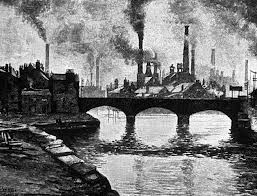
The first was Boyle’s history lesson. By selecting the Industrial and Information Revolutions as punctuation for his story, Boyle picked not only two great moments of British creativity (the former more than the latter, of course), but also two key periods in the complexity of human society.
By enabling previously inaccessible stores of chemical energy to be harnessed, the Industrial Revolution made possible an explosion in the diversity of production, which in turn made human society dramatically more complex. Broadly speaking, what happened was: cheaper energy led to cheaper production, which facilitated greater diversity, which involved greater complexity; and this catalysed a substantial increase in living standards.
The digital transformation currently sweeping the world, stimulated in part by Tim Berners-Lee’s creation of the World Wide Web, will be similarly far-reaching in its effects; indeed it is already creating major policy challenges, as I described in a previous blog. By reducing to almost nothing a whole swathe of transaction costs, the Information Revolution seems to be giving way to a second great wave of “complexification”. It will do this by allowing us to combine ever greater numbers of components in complex social systems, probably giving way to increased specialisation, and unleashing greater levels of net wealth. As I argued in my previous blog, this is likely to be net beneficial but we should be mindful of the pain involved.
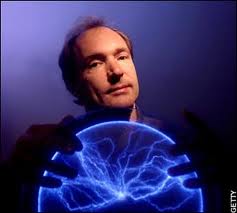
Tim Berners-Lee
Friday, August 3, 2012
Systems Thinking in Conflict Resolution
By writing an article on projectmanagement and systemsthinking I found a very good article of the Eastern Martial Arts , systemsthinking and conflict solving, which I want to share with you . (Published by Pegasus Communications)
By Judy Ringer
I teach Aikido—on the mat and in organizational training spaces.
On the mat, we take turns giving and receiving physical attacks, falling down and getting up again about a hundred times a night, disarming our partner without harm. We come to the mat for exercise, to study self-defense, and to practice resilience, self-control, and courage under pressure.
In organizations, participants come for similar reasons.
We do kinesthetic Aikido activities to gain insight into how what happens on the mat applies to conflict, communication, and stress in everyday life.
What does Aikido teach us?
Aikido’s first teaching is in the way it frames attack.
The Aikidoist sees the attack, the conflict, as energy to be utilized—as a gift.
The beauty of this premise is that it changes the locus of power from an external to an internal source. We all encounter unwished-for events, people, and problems every day. To successfully manage these conflicts, we manage ourselves. When I experience conflict as attack, I resist, defend, or avoid. When I frame conflict as a gift, I am willing to engage, explore, and work with it. By changing my view, I change my relationship to the conflict.
Reframing our challenges as energy to be received and redirected into something useful is the first step. But how do we actually make this shift when our emotions are triggered? This is Aikido’s second teaching.
For example, think about a conflict in which you are currently involved. Imagine the situation in detail.
Now pay attention to your body.
What do you notice?
Do you become tense?
Does your breathing or heart rate quicken?
What emotions arise?
By Judy Ringer
I teach Aikido—on the mat and in organizational training spaces.
On the mat, we take turns giving and receiving physical attacks, falling down and getting up again about a hundred times a night, disarming our partner without harm. We come to the mat for
exercise, to study self-defense, and to practice resilience, self-control, and courage under pressure.In organizations, participants come for similar reasons.
We do kinesthetic Aikido activities to gain insight into how what happens on the mat applies to conflict, communication, and stress in everyday life.
What does Aikido teach us?
Aikido’s first teaching is in the way it frames attack.
The Aikidoist sees the attack, the conflict, as energy to be utilized—as a gift.
The beauty of this premise is that it changes the locus of power from an external to an internal source. We all encounter unwished-for events, people, and problems every day. To successfully manage these conflicts, we manage ourselves. When I experience conflict as attack, I resist, defend, or avoid. When I frame conflict as a gift, I am willing to engage, explore, and work with it. By changing my view, I change my relationship to the conflict.
Reframing our challenges as energy to be received and redirected into something useful is the first step. But how do we actually make this shift when our emotions are triggered? This is Aikido’s second teaching.
For example, think about a conflict in which you are currently involved. Imagine the situation in detail.
Now pay attention to your body.
What do you notice?
Do you become tense?
Does your breathing or heart rate quicken?
What emotions arise?
Wednesday, July 25, 2012
Complexe problemen hebben geen simpele oplossingen
Rusell Ackoff, een Amerikaanse prof aan de MIT business School in Boston was een guru in het systeemdenken , die zijn visie's en ideeën
spiritueel en enthousiast kon overdragen ...soms wat ironisch maar toch
"to the point".
Voor zijn dood in 2009 , heeft hij een boek geschreven :
" Managent f-Laws-how organisations realy work"
Daar heeft hij 81 statements(f-laws)die in organisatie's echt gebeuren vastgelegt.Niet alles is zo reeël , maar toch zijn het triggerpoints om anders naar organisatie's te kijken en in te zien wat er veranderd moet worden .
Elke f-law is ook gecommentarieerd door Sally Bib, ook een prof ,maar een gans andere tijdsgenoot( Russel was 89jaar, Sally 35), ander continent, andere ervaring en een vrouw.
Ik wil hier een voorbeeld aanhalen :
f-Law n° 80:"Complex problems do not have simple solutions, onlysimple minded managers and their consultants think they do"
De enige problemen die simpele oplossingen hebben zijn simpele problemen.
Problemen die voorkomen in organisatie's zijn meestal het gevolg ven de interactie's tussen de verschillende delen van de organisatie's en nooit van één enkel deel: het is complexer en de oplossing ook.
Complexiteit is niet eigen aan het probleem , maar hoe je naar het probleem kijkt en wie naar het probleem kijkt .
Het is zo dat problemen van anderen meestal simpel gezien worden en onze eigen problemen meer complex.
Sally's antwoord hierop luidt als volgt , en persoonlijk ben ik het daar zeker mee eens:
De mensen zoeken eenvoud en simpele zaken : het is zo gemakkelijker !
Het is ook daarom dat we hedendaags alles voorgekauwd krijgen in bvb:
- 20 methodes om te vermageren
- 12 wegen om efficient te worden
- 10 factoren om succes te hebben
enz....
Business boeken , blog's, media zijn alle daarop gericht want het verkoopt.
Nochthans , zich buigen over complexe problemen, erover filosoferen , discussieren met collega's kan zo verrijkend zijn . verrijkend om het te begrijpen en zelf met een oplossing te komen.
Spijtig is er zo maar een kleine groep, maar door de sociale media wordt er meer en meer ervaring uitgewisseld.
Het "quick en easy" antwoord moet meer en meer in vraag gesteld worden ,en bekeken worden in het grotere geheel:systeemdenken leert ons dat!!
Voor zijn dood in 2009 , heeft hij een boek geschreven :
" Managent f-Laws-how organisations realy work"
Daar heeft hij 81 statements(f-laws)die in organisatie's echt gebeuren vastgelegt.Niet alles is zo reeël , maar toch zijn het triggerpoints om anders naar organisatie's te kijken en in te zien wat er veranderd moet worden .
Elke f-law is ook gecommentarieerd door Sally Bib, ook een prof ,maar een gans andere tijdsgenoot( Russel was 89jaar, Sally 35), ander continent, andere ervaring en een vrouw.
Ik wil hier een voorbeeld aanhalen :
f-Law n° 80:"Complex problems do not have simple solutions, onlysimple minded managers and their consultants think they do"
De enige problemen die simpele oplossingen hebben zijn simpele problemen.
Problemen die voorkomen in organisatie's zijn meestal het gevolg ven de interactie's tussen de verschillende delen van de organisatie's en nooit van één enkel deel: het is complexer en de oplossing ook.
Complexiteit is niet eigen aan het probleem , maar hoe je naar het probleem kijkt en wie naar het probleem kijkt .
Het is zo dat problemen van anderen meestal simpel gezien worden en onze eigen problemen meer complex.
Sally's antwoord hierop luidt als volgt , en persoonlijk ben ik het daar zeker mee eens:
De mensen zoeken eenvoud en simpele zaken : het is zo gemakkelijker !
Het is ook daarom dat we hedendaags alles voorgekauwd krijgen in bvb:
- 20 methodes om te vermageren
- 12 wegen om efficient te worden
- 10 factoren om succes te hebben
enz....
Business boeken , blog's, media zijn alle daarop gericht want het verkoopt.
Nochthans , zich buigen over complexe problemen, erover filosoferen , discussieren met collega's kan zo verrijkend zijn . verrijkend om het te begrijpen en zelf met een oplossing te komen.
Spijtig is er zo maar een kleine groep, maar door de sociale media wordt er meer en meer ervaring uitgewisseld.
Het "quick en easy" antwoord moet meer en meer in vraag gesteld worden ,en bekeken worden in het grotere geheel:systeemdenken leert ons dat!!
Monday, June 25, 2012
Work-Life Balance

Last night , my son in law visited me with his girlfriend and we talked about there last travel , the work and what they were planned for next week .Like also in other discussion with other people , they were so worried about the time flying by, to have no time for pleasure, has too much work, so much to do , ......has to work late at night and difficult to have a family time .
In summary:to have a good life, a good work-life balance should be considered otherwise a burn-out was nearby.
When , there were gone I started to think that the word "Work-life" is a problem:Looking as such work and life are separately and considered as two different closed systems, working undependable from each other.It implies that "work" isn't part of life!!
Work( your professional activities,) and life( your personal activities,:family, hobby) are elements of your life(your living, well-being).
Seeing your life as a system will help you to understand that the 2 subsystems(Work-Life)are connected and interrelated and that everything that happens in one system will influence and change the behavior in the other system.
Finding synergy will create a emergence property of happiness.
So don't act in boxes: don't try to optimize your efforts in work separately or optimizing your personal life.
Doing so you will create reinforcement loops in each sub-system, with after a certain time , a collapse as result:burn-out!
So how can you do this?
1.Think holistically:
Don't plan your career , plan your life.Don't manage your money, manage your life.
2. Don't think separate but integrate!!
Don't think personal and professional;bring them together as part of a system--your life
Think about them working together:the personal helping build the professional and vice versa.
This quote of Georges Bateson is a good demonstration of it .
Gregory Bateson A Sacred Unity Harper 1991 ISBN 0-06-250100-3
A system, after all, is any unit containing feedback structure and therefore competent to process information. There are ecological systems, social systems, and the individual organism plus the environment with which it interacts is itself a system in this technical sense. The circumstance that the family as a unit came to be thought of as a system must lead back inevitably, I believe, to considering the individual as a system.
It follows that the ways of thinking evolved by psychiatrists in order to understand the family as a system. . . .The polarization of opinion then will not be simply between practitioners of individual therapy and practitioners of family therapy but between those who think in terms of systems and those who think in terms of lineal sequences of cause and effect. . . .
The basic rule of system theory is that, if you want to understand some phenomenon or appearance, you must consider that phenomenon within he context of all completed circuits which are relevant to it.
Thursday, June 7, 2012
Strategic Thinking and Systems Thinking
Lately I've read a article from Paul Schoemaker:"The 6 habits of True Strategic Thinkers".I was pleased about the content , because a lot was in agreement with what I had done in my career as leader of a company.I was even more pleased about the similarity of strategic thinking with systems thinking...the only question is what is part of.
It's the story of the chicken and the egg , but who matters..the important is , that the mindset is the same.
Before discussing , these similarity's it's my humble opinion that strategic thinking is important , but also tactical thinking as well linear thinking (analyse ) is as important as systems thinking(syntheses).
Let's compare now the 6 Habits with system thinking elements:
1.Anticipate:
"Look for game changing information at the boundary's of your industry"
"Search beyond the current boundaries of your business"
"Build wide external networks to help you scan the horizon better"
A system thinker see his organization as an open system, composed of subsystems and elements , all in interrelationship which each other .
A system is dynamic.
Everything is influencing everything and the property of the system is more than the sum of the property's of his elements.You have to be aware that a small change in a element of relation, can have a big impact on the whole.
A System , has always a purpose.
Define the periphery of your system large enough ( but manageable)to have enough information to define the purpose and the external factors , which can influenced it .
2.Think Critically:
" Re frame problems to get to the bottom of things"
"Challenge current beliefs and mindsets
"Uncover hypocrisy, manipulation ...."
A systems thinker is able to open his mind and to question his and others mental models .His communication is by dialogue, asking the right questions and to have good listening skills.
He goes beyond the events and take the information of all stakeholders in order to the most objective story.
3.Interpret:
" Seek patterns in multiple sources of data and encourage others to do the same"
"Question prevailing assumptions and test multiple hypotheses simultaneously"
A systems thinker is using the data of a team , and is a team player.
He put the data in a Behavior Over Time scheme, which will give him behavior patterns.
4.Decide:
"Carefully frame the decision to get to the crux of the matter."
"Leave perfection to higher powers"
" Take a stand even with incomplete information"
A system thinker is aware of the system and critical elements that causes the behavior . Because of the interrelationship between the elements , there is NO One cause.
Different leverage points will be tried out and the decision will be taken which one is timely the best , to achieve the purpose of the system :different scenarios will exist , because the system is dynamic.
5.Align:
"Foster open dialogue"
"Build trust and engage key stakeholders"
"Asses risk tolerances"
A systems thinker has a personal mastery to create a shared vision, even when views diverge.By open dialogue and to be part of the system is capable to discuss the different mental models and to define the leverage points for alignment.
6.Learn:
"Encourage and exemplify honest debriefs to extracts lessons"
"Celebrate both success and failures that provide insight"
A system thinker is aware of time delays and unexpected situations , by taking decisions.
Long term perspective is as such as important as short term results .
A system thinker doesn't look after the guilty person of process, but try to understand which relationship causes the failure.
As you can see , there is a lot of similarity and the good point is , systems thinking can be learned!!
It's the story of the chicken and the egg , but who matters..the important is , that the mindset is the same.
Before discussing , these similarity's it's my humble opinion that strategic thinking is important , but also tactical thinking as well linear thinking (analyse ) is as important as systems thinking(syntheses).
Let's compare now the 6 Habits with system thinking elements:
1.Anticipate:
"Look for game changing information at the boundary's of your industry"
"Search beyond the current boundaries of your business"
"Build wide external networks to help you scan the horizon better"
A system thinker see his organization as an open system, composed of subsystems and elements , all in interrelationship which each other .
A system is dynamic.
Everything is influencing everything and the property of the system is more than the sum of the property's of his elements.You have to be aware that a small change in a element of relation, can have a big impact on the whole.
A System , has always a purpose.
Define the periphery of your system large enough ( but manageable)to have enough information to define the purpose and the external factors , which can influenced it .
2.Think Critically:
" Re frame problems to get to the bottom of things"
"Challenge current beliefs and mindsets
"Uncover hypocrisy, manipulation ...."
A systems thinker is able to open his mind and to question his and others mental models .His communication is by dialogue, asking the right questions and to have good listening skills.
He goes beyond the events and take the information of all stakeholders in order to the most objective story.
3.Interpret:
" Seek patterns in multiple sources of data and encourage others to do the same"
"Question prevailing assumptions and test multiple hypotheses simultaneously"
A systems thinker is using the data of a team , and is a team player.
He put the data in a Behavior Over Time scheme, which will give him behavior patterns.
4.Decide:
"Carefully frame the decision to get to the crux of the matter."
"Leave perfection to higher powers"
" Take a stand even with incomplete information"
A system thinker is aware of the system and critical elements that causes the behavior . Because of the interrelationship between the elements , there is NO One cause.
Different leverage points will be tried out and the decision will be taken which one is timely the best , to achieve the purpose of the system :different scenarios will exist , because the system is dynamic.
5.Align:
"Foster open dialogue"
"Build trust and engage key stakeholders"
"Asses risk tolerances"
A systems thinker has a personal mastery to create a shared vision, even when views diverge.By open dialogue and to be part of the system is capable to discuss the different mental models and to define the leverage points for alignment.
6.Learn:
"Encourage and exemplify honest debriefs to extracts lessons"
"Celebrate both success and failures that provide insight"
A system thinker is aware of time delays and unexpected situations , by taking decisions.
Long term perspective is as such as important as short term results .
A system thinker doesn't look after the guilty person of process, but try to understand which relationship causes the failure.
As you can see , there is a lot of similarity and the good point is , systems thinking can be learned!!
Wednesday, May 23, 2012
NLP and Systems thinking
NLP is a methodology for training, coaching and improving communication.
It was developed in the 70's at the University of California (Santa Cruz), by founders John Grinder and Richard Bandler.
They built further on the work of Gregory Bateson, Milton Erickson, Noam Chomsky and others.
NLP practitioners consider NLP as an eclectic psychology, a partnership between different models and techniques of therapy and communication.
Over time, more NLP was developed to be used in all personal and organisational disciplines, where communication is important. Robert Dilts, Stephen Gilligan can be named as a few key developers.
In summary:
Here we come now to the definition of systems and systems thinking:
The meaning of the word system is reflected in the Greek Systema, that "organic whole" means. The systemic view see system parts that are interrelated and also takes into account the quality and perception of the observer.
"A system is the whole components which are connected to each other by a network of relations".
Systems thinking is a method to better deal with the complex relationship that exists between systems, their ecology and their components.People are part of larger social systems,but also the inner human processes and subsystems are systemically interrelated.
For in the words of Robert Dilts (founder of Systemic NLP) to say:
- With NLP ,you convince people, you communicate better and you will reach your goals faster.
- With systems thinking you will create improvements with a strong leverage effect.
Combine them to make a powerful influence on your company, team and people.
Learn how systems (organizations, teams, employees) can be influenced and controlled with NLP and systems thinking.
More influence with NLP:
With NLP you can discover what is going on in people as they communicate and decide, and how you can influence decisions.
You become more effective by taking over successful strategies and behavior of others .
And you learn how the interactions within an organization or team can be navigated.
More insight with Systems Thinking:
With systems thinking you dig deeper in the dynamics of systems, companies, teams and events.
Many people look only at behavior or events, a system thinker try to discover trends and to predict such events.
With systems thinking you dive deeper, you discover the cause of behavior or events and will understand and manage better the complex problems.
Conclusion:
With Systemic NLP you can:
* Adjust businesses and organizations in a sustainable way .
* Better understand what clients and colleagues really mean.
* See what intentions they have.
* Create more support for openness and understanding.
* Quickly get a grip on what people boaters.
* Motivate people strongly.
It was developed in the 70's at the University of California (Santa Cruz), by founders John Grinder and Richard Bandler.
They built further on the work of Gregory Bateson, Milton Erickson, Noam Chomsky and others.
NLP practitioners consider NLP as an eclectic psychology, a partnership between different models and techniques of therapy and communication.
Over time, more NLP was developed to be used in all personal and organisational disciplines, where communication is important. Robert Dilts, Stephen Gilligan can be named as a few key developers.
In summary:
-
The first generation of NLP is the work of Bandler and Grinder till the
early 80's.
Focus was on the individual:cognitive brain skills and
techniques at the level of behavior and abilities.
-
In the mid 80's the second generation of NLP has been developed, with more
emphasis between "myself and the other":the somatic brain at the level of
values and beliefs.
-
The third generation (around 2000) also deals with themes such as
identity, vision and mission.It is the larger view (system) which is important, with a focus on inter-relationship of the parts of the system and their
interactions
It also involves the larger systems such as families, organizations and cultures in the change.
Here we come now to the definition of systems and systems thinking:
The meaning of the word system is reflected in the Greek Systema, that "organic whole" means. The systemic view see system parts that are interrelated and also takes into account the quality and perception of the observer.
"A system is the whole components which are connected to each other by a network of relations".
Systems thinking is a method to better deal with the complex relationship that exists between systems, their ecology and their components.People are part of larger social systems,but also the inner human processes and subsystems are systemically interrelated.
For in the words of Robert Dilts (founder of Systemic NLP) to say:
"As Systemic NLP Practitioners we are able to
change the behavior of systems with minimal interventions, and working at different levels:
identity, values and beliefs, ability, behavior and environment.
And
with "systems" we mean both people, their programs, their beliefs,
their skills and the systems in which people move: social systems such
as relationship, family and organization's. "
- With NLP ,you convince people, you communicate better and you will reach your goals faster.
- With systems thinking you will create improvements with a strong leverage effect.
Combine them to make a powerful influence on your company, team and people.
Learn how systems (organizations, teams, employees) can be influenced and controlled with NLP and systems thinking.
More influence with NLP:
With NLP you can discover what is going on in people as they communicate and decide, and how you can influence decisions.
You become more effective by taking over successful strategies and behavior of others .
And you learn how the interactions within an organization or team can be navigated.
More insight with Systems Thinking:
With systems thinking you dig deeper in the dynamics of systems, companies, teams and events.
Many people look only at behavior or events, a system thinker try to discover trends and to predict such events.
With systems thinking you dive deeper, you discover the cause of behavior or events and will understand and manage better the complex problems.
Conclusion:
With Systemic NLP you can:
* Adjust businesses and organizations in a sustainable way .
* Better understand what clients and colleagues really mean.
* See what intentions they have.
* Create more support for openness and understanding.
* Quickly get a grip on what people boaters.
* Motivate people strongly.
Subscribe to:
Posts (Atom)