When I retired from my company , where I worked 37 years and the last 15 years as business leader of the European Branch, I received from my employees and workers the most magnificent gift I could dream off: 150 people wrote their opinions about me.
Reading them , the tears were flowing because they were nothing else than congratulations,words of thanks and putting me as an example of their ideal boss: a people manager.
And so it is , managing and leading a company is leading people.....Leading the company as a social system.It's not easily, because still today company's are seen as dynamic organism, but where the dynamic is done by machines , rules, procedures and policies.
Because of internally and externally pressures, corporate leaders became aware of the need to take into account the concerns , interests and objectives of :
- first the people directly part of the system: workers, employees, customers, suppliers, subcontractors
- second the larger systems that contain them:society, legal systems, family's...
- third ,the purposes of the different systems
For me , all members of the whole system were my customers which I respected by listening to them, sharing my experience , helping them to give solutions , helping by giving the resources for development. The corporate "shareholder", was fast replaced in my mind by the "Stakeholder"
We are living in a complex world, with a overflow of communication, fast changes and globalisation in all aspects. I want to give you some critical points, I've used to manage my organisation. I think there are also the critical skills of each businessleader today:
Sunday, September 9, 2012


Wednesday, August 29, 2012
Olympic Complexity
I want to share this article about the complexity of the olympic games
By Chris Davies
The spectacular spectacular with which Danny Boyle opened the Olympics had many things to recommend it. But alongside the dazzle, wit and downright eccentricity of the whole thing, there were two aspects of the opening ceremony that led me to reflect on the complexity of social systems.

The first was Boyle’s history lesson. By selecting the Industrial and Information Revolutions as punctuation for his story, Boyle picked not only two great moments of British creativity (the former more than the latter, of course), but also two key periods in the complexity of human society.
By enabling previously inaccessible stores of chemical energy to be harnessed, the Industrial Revolution made possible an explosion in the diversity of production, which in turn made human society dramatically more complex. Broadly speaking, what happened was: cheaper energy led to cheaper production, which facilitated greater diversity, which involved greater complexity; and this catalysed a substantial increase in living standards.
The digital transformation currently sweeping the world, stimulated in part by Tim Berners-Lee’s creation of the World Wide Web, will be similarly far-reaching in its effects; indeed it is already creating major policy challenges, as I described in a previous blog. By reducing to almost nothing a whole swathe of transaction costs, the Information Revolution seems to be giving way to a second great wave of “complexification”. It will do this by allowing us to combine ever greater numbers of components in complex social systems, probably giving way to increased specialisation, and unleashing greater levels of net wealth. As I argued in my previous blog, this is likely to be net beneficial but we should be mindful of the pain involved.
 - The second aspect of the opening ceremony that spoke to complexity
was a subtler one. This was the message that achievement is a
collective, systemic phenomenon, not simply the result of one person’s
endeavours. This may seem paradoxical in the context of something like
sport, which is surely the very acme of individualism: what on earth
does Usain Bolt’s ability to run the 100 metres in 9.58 seconds have to
do with the broader social system?
- The second aspect of the opening ceremony that spoke to complexity
was a subtler one. This was the message that achievement is a
collective, systemic phenomenon, not simply the result of one person’s
endeavours. This may seem paradoxical in the context of something like
sport, which is surely the very acme of individualism: what on earth
does Usain Bolt’s ability to run the 100 metres in 9.58 seconds have to
do with the broader social system?
By Chris Davies
The spectacular spectacular with which Danny Boyle opened the Olympics had many things to recommend it. But alongside the dazzle, wit and downright eccentricity of the whole thing, there were two aspects of the opening ceremony that led me to reflect on the complexity of social systems.

The first was Boyle’s history lesson. By selecting the Industrial and Information Revolutions as punctuation for his story, Boyle picked not only two great moments of British creativity (the former more than the latter, of course), but also two key periods in the complexity of human society.
By enabling previously inaccessible stores of chemical energy to be harnessed, the Industrial Revolution made possible an explosion in the diversity of production, which in turn made human society dramatically more complex. Broadly speaking, what happened was: cheaper energy led to cheaper production, which facilitated greater diversity, which involved greater complexity; and this catalysed a substantial increase in living standards.
The digital transformation currently sweeping the world, stimulated in part by Tim Berners-Lee’s creation of the World Wide Web, will be similarly far-reaching in its effects; indeed it is already creating major policy challenges, as I described in a previous blog. By reducing to almost nothing a whole swathe of transaction costs, the Information Revolution seems to be giving way to a second great wave of “complexification”. It will do this by allowing us to combine ever greater numbers of components in complex social systems, probably giving way to increased specialisation, and unleashing greater levels of net wealth. As I argued in my previous blog, this is likely to be net beneficial but we should be mindful of the pain involved.
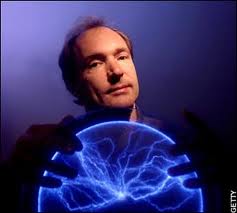
Tim Berners-Lee
Friday, August 3, 2012
Systems Thinking in Conflict Resolution
By writing an article on projectmanagement and systemsthinking I found a very good article of the Eastern Martial Arts , systemsthinking and conflict solving, which I want to share with you . (Published by Pegasus Communications)
By Judy Ringer
I teach Aikido—on the mat and in organizational training spaces.
On the mat, we take turns giving and receiving physical attacks, falling down and getting up again about a hundred times a night, disarming our partner without harm. We come to the mat for exercise, to study self-defense, and to practice resilience, self-control, and courage under pressure.
In organizations, participants come for similar reasons.
We do kinesthetic Aikido activities to gain insight into how what happens on the mat applies to conflict, communication, and stress in everyday life.
What does Aikido teach us?
Aikido’s first teaching is in the way it frames attack.
The Aikidoist sees the attack, the conflict, as energy to be utilized—as a gift.
The beauty of this premise is that it changes the locus of power from an external to an internal source. We all encounter unwished-for events, people, and problems every day. To successfully manage these conflicts, we manage ourselves. When I experience conflict as attack, I resist, defend, or avoid. When I frame conflict as a gift, I am willing to engage, explore, and work with it. By changing my view, I change my relationship to the conflict.
Reframing our challenges as energy to be received and redirected into something useful is the first step. But how do we actually make this shift when our emotions are triggered? This is Aikido’s second teaching.
For example, think about a conflict in which you are currently involved. Imagine the situation in detail.
Now pay attention to your body.
What do you notice?
Do you become tense?
Does your breathing or heart rate quicken?
What emotions arise?
By Judy Ringer
I teach Aikido—on the mat and in organizational training spaces.
On the mat, we take turns giving and receiving physical attacks, falling down and getting up again about a hundred times a night, disarming our partner without harm. We come to the mat for
exercise, to study self-defense, and to practice resilience, self-control, and courage under pressure.In organizations, participants come for similar reasons.
We do kinesthetic Aikido activities to gain insight into how what happens on the mat applies to conflict, communication, and stress in everyday life.
What does Aikido teach us?
Aikido’s first teaching is in the way it frames attack.
The Aikidoist sees the attack, the conflict, as energy to be utilized—as a gift.
The beauty of this premise is that it changes the locus of power from an external to an internal source. We all encounter unwished-for events, people, and problems every day. To successfully manage these conflicts, we manage ourselves. When I experience conflict as attack, I resist, defend, or avoid. When I frame conflict as a gift, I am willing to engage, explore, and work with it. By changing my view, I change my relationship to the conflict.
Reframing our challenges as energy to be received and redirected into something useful is the first step. But how do we actually make this shift when our emotions are triggered? This is Aikido’s second teaching.
For example, think about a conflict in which you are currently involved. Imagine the situation in detail.
Now pay attention to your body.
What do you notice?
Do you become tense?
Does your breathing or heart rate quicken?
What emotions arise?
Wednesday, July 25, 2012
Complexe problemen hebben geen simpele oplossingen
Rusell Ackoff, een Amerikaanse prof aan de MIT business School in Boston was een guru in het systeemdenken , die zijn visie's en ideeën
spiritueel en enthousiast kon overdragen ...soms wat ironisch maar toch
"to the point".
Voor zijn dood in 2009 , heeft hij een boek geschreven :
" Managent f-Laws-how organisations realy work"
Daar heeft hij 81 statements(f-laws)die in organisatie's echt gebeuren vastgelegt.Niet alles is zo reeël , maar toch zijn het triggerpoints om anders naar organisatie's te kijken en in te zien wat er veranderd moet worden .
Elke f-law is ook gecommentarieerd door Sally Bib, ook een prof ,maar een gans andere tijdsgenoot( Russel was 89jaar, Sally 35), ander continent, andere ervaring en een vrouw.
Ik wil hier een voorbeeld aanhalen :
f-Law n° 80:"Complex problems do not have simple solutions, onlysimple minded managers and their consultants think they do"
De enige problemen die simpele oplossingen hebben zijn simpele problemen.
Problemen die voorkomen in organisatie's zijn meestal het gevolg ven de interactie's tussen de verschillende delen van de organisatie's en nooit van één enkel deel: het is complexer en de oplossing ook.
Complexiteit is niet eigen aan het probleem , maar hoe je naar het probleem kijkt en wie naar het probleem kijkt .
Het is zo dat problemen van anderen meestal simpel gezien worden en onze eigen problemen meer complex.
Sally's antwoord hierop luidt als volgt , en persoonlijk ben ik het daar zeker mee eens:
De mensen zoeken eenvoud en simpele zaken : het is zo gemakkelijker !
Het is ook daarom dat we hedendaags alles voorgekauwd krijgen in bvb:
- 20 methodes om te vermageren
- 12 wegen om efficient te worden
- 10 factoren om succes te hebben
enz....
Business boeken , blog's, media zijn alle daarop gericht want het verkoopt.
Nochthans , zich buigen over complexe problemen, erover filosoferen , discussieren met collega's kan zo verrijkend zijn . verrijkend om het te begrijpen en zelf met een oplossing te komen.
Spijtig is er zo maar een kleine groep, maar door de sociale media wordt er meer en meer ervaring uitgewisseld.
Het "quick en easy" antwoord moet meer en meer in vraag gesteld worden ,en bekeken worden in het grotere geheel:systeemdenken leert ons dat!!
Voor zijn dood in 2009 , heeft hij een boek geschreven :
" Managent f-Laws-how organisations realy work"
Daar heeft hij 81 statements(f-laws)die in organisatie's echt gebeuren vastgelegt.Niet alles is zo reeël , maar toch zijn het triggerpoints om anders naar organisatie's te kijken en in te zien wat er veranderd moet worden .
Elke f-law is ook gecommentarieerd door Sally Bib, ook een prof ,maar een gans andere tijdsgenoot( Russel was 89jaar, Sally 35), ander continent, andere ervaring en een vrouw.
Ik wil hier een voorbeeld aanhalen :
f-Law n° 80:"Complex problems do not have simple solutions, onlysimple minded managers and their consultants think they do"
De enige problemen die simpele oplossingen hebben zijn simpele problemen.
Problemen die voorkomen in organisatie's zijn meestal het gevolg ven de interactie's tussen de verschillende delen van de organisatie's en nooit van één enkel deel: het is complexer en de oplossing ook.
Complexiteit is niet eigen aan het probleem , maar hoe je naar het probleem kijkt en wie naar het probleem kijkt .
Het is zo dat problemen van anderen meestal simpel gezien worden en onze eigen problemen meer complex.
Sally's antwoord hierop luidt als volgt , en persoonlijk ben ik het daar zeker mee eens:
De mensen zoeken eenvoud en simpele zaken : het is zo gemakkelijker !
Het is ook daarom dat we hedendaags alles voorgekauwd krijgen in bvb:
- 20 methodes om te vermageren
- 12 wegen om efficient te worden
- 10 factoren om succes te hebben
enz....
Business boeken , blog's, media zijn alle daarop gericht want het verkoopt.
Nochthans , zich buigen over complexe problemen, erover filosoferen , discussieren met collega's kan zo verrijkend zijn . verrijkend om het te begrijpen en zelf met een oplossing te komen.
Spijtig is er zo maar een kleine groep, maar door de sociale media wordt er meer en meer ervaring uitgewisseld.
Het "quick en easy" antwoord moet meer en meer in vraag gesteld worden ,en bekeken worden in het grotere geheel:systeemdenken leert ons dat!!
Monday, June 25, 2012
Work-Life Balance

Last night , my son in law visited me with his girlfriend and we talked about there last travel , the work and what they were planned for next week .Like also in other discussion with other people , they were so worried about the time flying by, to have no time for pleasure, has too much work, so much to do , ......has to work late at night and difficult to have a family time .
In summary:to have a good life, a good work-life balance should be considered otherwise a burn-out was nearby.
When , there were gone I started to think that the word "Work-life" is a problem:Looking as such work and life are separately and considered as two different closed systems, working undependable from each other.It implies that "work" isn't part of life!!
Work( your professional activities,) and life( your personal activities,:family, hobby) are elements of your life(your living, well-being).
Seeing your life as a system will help you to understand that the 2 subsystems(Work-Life)are connected and interrelated and that everything that happens in one system will influence and change the behavior in the other system.
Finding synergy will create a emergence property of happiness.
So don't act in boxes: don't try to optimize your efforts in work separately or optimizing your personal life.
Doing so you will create reinforcement loops in each sub-system, with after a certain time , a collapse as result:burn-out!
So how can you do this?
1.Think holistically:
Don't plan your career , plan your life.Don't manage your money, manage your life.
2. Don't think separate but integrate!!
Don't think personal and professional;bring them together as part of a system--your life
Think about them working together:the personal helping build the professional and vice versa.
This quote of Georges Bateson is a good demonstration of it .
Gregory Bateson A Sacred Unity Harper 1991 ISBN 0-06-250100-3
A system, after all, is any unit containing feedback structure and therefore competent to process information. There are ecological systems, social systems, and the individual organism plus the environment with which it interacts is itself a system in this technical sense. The circumstance that the family as a unit came to be thought of as a system must lead back inevitably, I believe, to considering the individual as a system.
It follows that the ways of thinking evolved by psychiatrists in order to understand the family as a system. . . .The polarization of opinion then will not be simply between practitioners of individual therapy and practitioners of family therapy but between those who think in terms of systems and those who think in terms of lineal sequences of cause and effect. . . .
The basic rule of system theory is that, if you want to understand some phenomenon or appearance, you must consider that phenomenon within he context of all completed circuits which are relevant to it.
Subscribe to:
Posts (Atom)